Hidden on the peaceful island of Papa Westray in Orkney, Scotland, the Knap of Howar is one of the most remarkable prehistoric sites in Europe. This exceptionally preserved Neolithic farmstead has fascinated archaeologists, historians, and travellers for decades because it provides a rare glimpse into everyday life more than 5,000 years ago. Unlike many ancient monuments that survive only as foundations, this stone-built settlement still retains many of its original features.
The Knap of Howar is often recognised as the oldest preserved stone house in Northern Europe, predating famous landmarks such as Stonehenge and even the Egyptian pyramids. Its enduring stone walls, built by skilled Neolithic farmers, demonstrate the ingenuity of early communities. Whether you are passionate about archaeology or planning a visit to Orkney, this guide explores the history, architecture, and significance of one of Scotland’s greatest archaeological treasures.
What Is the Knap of Howar?
The Knap of Howar is a remarkably well-preserved Neolithic farmstead situated on Papa Westray, one of the northernmost islands of the Orkney archipelago. Archaeological evidence suggests that it was occupied between approximately 3700 BC and 2800 BC, making it one of the oldest surviving stone-built dwellings in Europe. The settlement consists of two adjoining stone houses connected by a narrow passage, offering valuable insights into prehistoric domestic life.
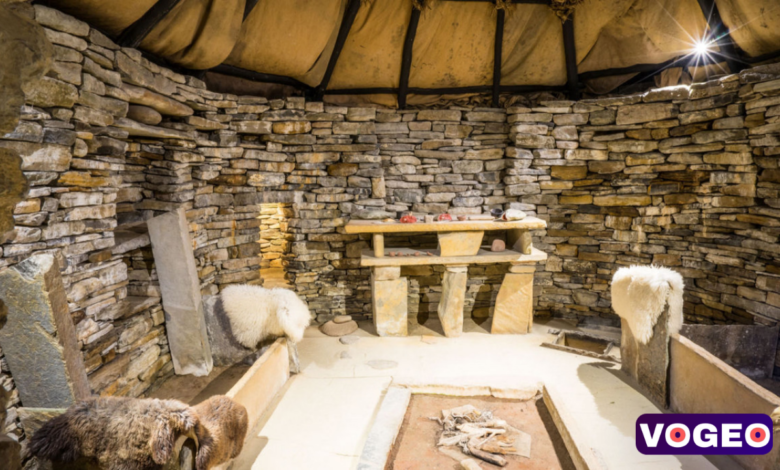
Unlike many ancient settlements that have deteriorated over time, the site has survived thanks to centuries of protection beneath layers of windblown sand. Excavations revealed original stone furniture, including beds, cupboards, storage spaces, and a central hearth. These extraordinary discoveries have helped researchers understand how early farming families organised their homes, prepared meals, and adapted to the challenging climate of Orkney.
Where Is the Knap of Howar?
The Knap of Howar is located on Papa Westray, a small island in the Orkney Islands, situated off the north coast of mainland Scotland. Surrounded by dramatic coastal scenery and rich wildlife, the site enjoys a peaceful setting overlooking the sea. Its remote location adds to its appeal, allowing visitors to experience an authentic connection with one of Britain’s earliest farming communities.
Travelling to the site requires a little planning but is well worth the journey. Visitors usually travel to Orkney by ferry or air before continuing to Papa Westray via a local ferry service or the world’s shortest scheduled flight. Once on the island, the ancient settlement is easily accessible by foot and can be combined with visits to other fascinating archaeological landmarks nearby, making it an unforgettable destination for history enthusiasts.
History of the Knap of Howar
The history of the Knap of Howar stretches back more than five millennia to the early Neolithic period, when farming began transforming communities across Britain. Radiocarbon dating indicates that families lived here for several centuries, cultivating crops and raising livestock while relying on the island’s natural resources. This long occupation demonstrates the stability and success of one of Europe’s earliest agricultural settlements.
The site remained hidden beneath layers of sand for thousands of years until coastal erosion exposed parts of the ancient buildings during the twentieth century. Archaeologists carefully excavated the settlement and uncovered remarkably preserved structures that had escaped significant damage. Their discoveries transformed understanding of prehistoric Britain and highlighted the advanced building skills of Neolithic people long before the construction of Stonehenge.
Who Built and Lived in the Knap of Howar?

The builders of the Knap of Howar were skilled Neolithic farmers who possessed an impressive understanding of stone construction. Using locally available sandstone, they created thick walls capable of withstanding Orkney’s strong winds and harsh weather. Although simple tools were available during this period, their craftsmanship produced homes that have survived for thousands of years, demonstrating remarkable engineering knowledge and practical design.
Life within the settlement centred on farming, fishing, and caring for livestock. Archaeological evidence suggests that residents cultivated barley and wheat while keeping cattle and sheep for food and materials. The stone hearth formed the heart of each house, providing warmth and a place for cooking, while carefully built cupboards and stone beds reveal an organised domestic environment designed to support everyday family life.
The Architecture of the Knap of Howar Stone House
One of the most fascinating features of the Knap of Howar is its outstanding architecture. The two adjoining houses were constructed using dry-stone techniques without mortar, relying entirely on carefully shaped stones fitted together with precision. Thick walls provided insulation against cold weather, while the compact design helped conserve heat during long northern winters.
Inside the houses, visitors can still see original stone furniture that has remained in place for thousands of years. Stone beds, storage compartments, shelves, and a central fireplace illustrate how practical and efficient these homes were. The thoughtful layout suggests that the inhabitants valued comfort and organisation, proving that sophisticated domestic planning existed long before written history.
Reconstruction of the Knap of Howar
The remarkable preservation of the Knap of Howar has enabled archaeologists to create accurate reconstructions of how the settlement once appeared. By studying the surviving walls, stone furniture, and everyday artefacts, experts have developed detailed models that illustrate how Neolithic families lived more than 5,000 years ago. These reconstructions provide valuable educational resources and help visitors visualise the appearance of the original buildings before centuries of weathering.
Modern technology has also played an important role in understanding the site. Digital reconstructions, museum displays, and archaeological illustrations allow researchers to test theories about roofing materials, room layouts, and domestic activities. Although some details remain uncertain, these carefully researched recreations offer one of the clearest pictures of prehistoric life anywhere in Britain and continue to improve as new discoveries are made.
Why the Knap of Howar Is So Important
The Knap of Howar is far more than an ancient ruin; it represents a significant milestone in European history. As one of the oldest surviving stone houses in Northern Europe, it provides direct evidence of how early farming communities established permanent settlements. Its exceptional state of preservation has helped historians understand Neolithic architecture, agricultural practices, and the daily routines of people who lived thousands of years before written records.
The site’s importance also lies in its influence on archaeological research throughout Scotland and beyond. Comparisons with nearby sites such as Skara Brae and other Orkney settlements have revealed how prehistoric communities developed over time. Together, these discoveries demonstrate that Orkney was an important centre of innovation during the Neolithic period, making the region one of the world’s most significant archaeological landscapes.
Visiting the Knap of Howar
A visit to the Knap of Howar offers an unforgettable opportunity to step into Britain’s distant past while enjoying the spectacular scenery of Orkney. The site is open to visitors throughout the year and can be explored at a relaxed pace. Walking around the ancient stone buildings allows guests to appreciate the impressive craftsmanship of the Neolithic builders and the peaceful coastal setting that has remained largely unchanged for millennia.
Many travellers combine their visit with other famous Orkney attractions, including Skara Brae, Maeshowe, the Ring of Brodgar, and the standing stones of Stenness. Comfortable walking shoes and weatherproof clothing are recommended, as the island’s weather can change quickly. Taking time to explore the surrounding coastline and wildlife makes the journey even more rewarding for history lovers and nature enthusiasts alike.
Interesting Facts About the Knap of Howar
One of the most astonishing facts about the Knap of Howar is that it is older than both Stonehenge and the Great Pyramid of Giza. Built around 3700 BC, the settlement has survived for over five thousand years, making it one of the earliest examples of permanent stone housing in Europe. This extraordinary longevity highlights the exceptional skill of its Neolithic builders and the durability of their construction techniques.
Another fascinating feature is the survival of original stone furniture inside the houses. Archaeologists discovered stone beds, cupboards, shelves, and a central hearth that remained largely intact after thousands of years. These rare discoveries offer a unique glimpse into prehistoric domestic life and demonstrate that early farming communities created practical, organised homes rather than simple shelters.
Conclusion
The Knap of Howar stands as one of Scotland’s greatest archaeological treasures and a remarkable reminder of human ingenuity during the Neolithic age. Its beautifully preserved stone houses reveal how early farming families adapted to their environment, developed permanent homes, and built thriving communities long before many of the world’s most famous ancient monuments were constructed. Every stone within the settlement tells a story of resilience, craftsmanship, and innovation.
Whether you are interested in archaeology, ancient history, or exploring the spectacular landscapes of Orkney, the Knap of Howar deserves a place on your travel itinerary. Its historical significance, outstanding preservation, and peaceful island setting combine to create an unforgettable experience that continues to inspire visitors from around the world while deepening our understanding of Britain’s prehistoric past.
Frequently Asked Questions
What is the Knap of Howar?
The Knap of Howar is a remarkably preserved Neolithic farmstead on Papa Westray in Orkney, Scotland.
Where is the Knap of Howar located?
It is located on the island of Papa Westray in the Orkney Islands, Scotland.
How old is the Knap of Howar?
The Knap of Howar dates back to around 3700 BC, making it over 5,000 years old.
Who built the Knap of Howar?
Neolithic farming communities built the Knap of Howar using locally sourced stone.
Who lived in the Knap of Howar?
Early farming families lived there, growing crops and raising livestock.
Is the Knap of Howar older than Stonehenge?
Yes, the Knap of Howar was built several centuries before Stonehenge.
Can visitors explore the Knap of Howar?
Yes, visitors can freely explore the well-preserved stone houses on Papa Westray.
Why is the Knap of Howar important?
It is one of the oldest surviving stone houses in Northern Europe and a key Neolithic site.
What can be seen inside the Knap of Howar?
Visitors can see original stone beds, cupboards, shelves, and a central hearth.
What other attractions are near the Knap of Howar?
Nearby attractions include Skara Brae, Maeshowe, the Ring of Brodgar, and the Standing Stones of Stenness.
Also Read: great western road