
journalword com is a search topic centred on journaling, productivity, personal organisation and practical ways to bring more structure into everyday life. Journaling can be as simple as writing a few thoughts in a notebook or as detailed as creating pages for goals, habits, schedules and reflections. For readers exploring this subject, the platform represents an opportunity to discover different approaches and decide which methods fit their routines, interests and personal priorities.
The appeal of journalword com comes from the versatility of journaling itself. A journal does not have to follow a strict format, and there is no single correct way to use one. Some people prefer planning their week, while others enjoy recording gratitude, tracking habits or expressing ideas creatively. By exploring several approaches, beginners can build a system that feels manageable, useful and enjoyable rather than turning journaling into another demanding responsibility.
How Does journalword com Work?
A journaling resource can help transform an otherwise vague interest into practical action. Instead of simply deciding to “journal more”, readers can explore specific formats, prompts, planning techniques and creative ideas. This makes the process easier to understand and gives beginners a starting point. A simple routine may begin with a daily note, a short list of priorities or a few sentences about the most important event of the day.
The most effective journaling approach is usually flexible enough to change with the user. Someone may begin with a weekly planner and later introduce a habit tracker or gratitude section. Another person may prefer creative pages and visual reminders. The important point is not to copy an elaborate system simply because it looks impressive online. A useful journal should save time, encourage reflection or support personal goals in a way that feels natural.
Bullet Journal Ideas for Beginners
Bullet journaling is one of the most flexible approaches for people who want to combine organisation with personal reflection. A basic Bullet Journal can contain monthly plans, weekly tasks, appointments, notes and goals. Additional collections can be introduced whenever they become useful. This flexibility means beginners do not need to purchase specialist equipment or spend hours creating elaborate layouts before they can benefit from the method.
The search phrase bullet journal journalword com reflects an interest in combining JournalWord-related information with the wider Bullet Journalling concept. Beginners can start with a simple notebook and pen, creating only the pages they genuinely need. A weekly spread, a short task list and a small habit tracker may be enough. As confidence grows, users can experiment with different layouts, symbols, collections and planning techniques without making the system unnecessarily complicated.
Gratitude Journaling for Reflection
A gratitude journal provides a dedicated space for noticing positive experiences, meaningful moments and everyday details that might otherwise be forgotten. Entries can be short and personal, ranging from a few words to several paragraphs. The purpose is not to produce beautifully written passages but to create a regular opportunity for reflection. Writing about a helpful conversation, an enjoyable walk or a small achievement can make an ordinary day more memorable.
The phrase gratitude journal journalword com relates the wider JournalWord search topic to this reflective form of journaling. Beginners can make the practice easier by using simple prompts, such as asking what went well today, what brought a smile, or which person deserves appreciation. There is no requirement to find something extraordinary every time. Consistent attention to ordinary positive experiences can make the practice feel more realistic and sustainable over the long term.
Using Stickers in Creative Journals
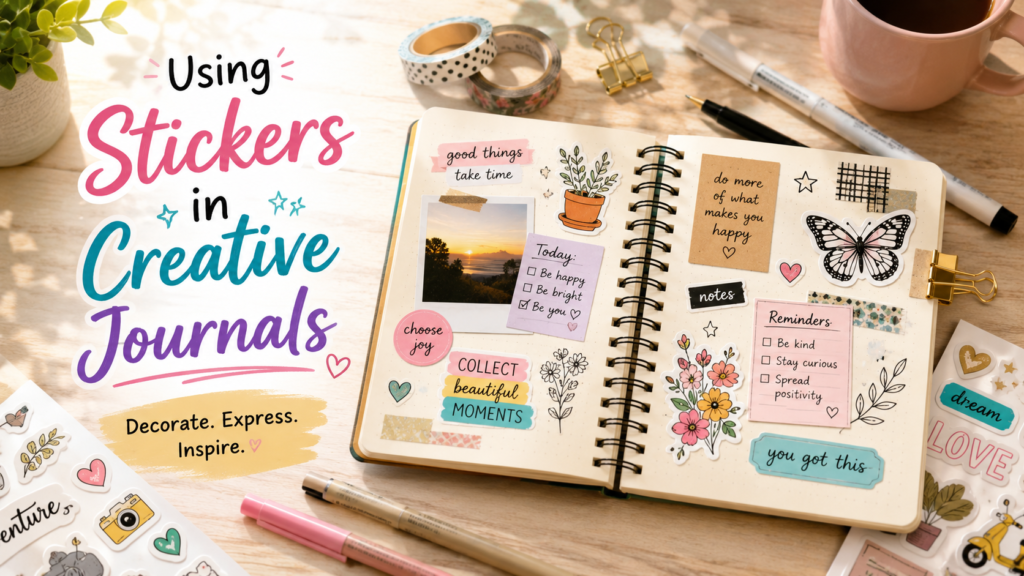
Stickers can give journals a distinctive visual character while also serving practical purposes. Decorative stickers can create themes, highlight special pages or simply make a notebook more enjoyable to use. Functional stickers can mark appointments, habits, deadlines or important reminders. For creative journal users, combining stickers with handwriting, drawings and simple colour schemes can turn routine planning into an engaging creative activity.
People searching for stickers journalword com may be interested in understanding how stationery fits into the wider journaling experience. However, stickers should be viewed as optional rather than essential. A journal can be highly effective without decorative supplies. The real value comes from the information and ideas recorded inside it. Stickers are best treated as a tool for motivation, organisation or creativity rather than something that determines whether a journal is successful.
Devin Haney and journalword com
The search phrase devin haney journalword com requires a more careful approach because the appearance of two terms together does not automatically prove that they are connected. Search results can associate unrelated names and websites for many reasons, including third-party articles, user searches, changing search trends or pages that simply mention both terms. A responsible article should therefore avoid presenting an unverified relationship as established fact.
Readers investigating a possible Devin Haney connection should look for direct and trustworthy evidence before accepting such a claim. This is particularly important when a recognised public figure is involved. If reliable evidence does not establish a relationship, the safest conclusion is that the search phrase alone is insufficient. Good online research depends on separating genuine associations from coincidental keyword combinations, especially when information may be repeated across multiple websites.
Benefits of Journaling for Everyday Organisation
One of the greatest strengths of journaling is its ability to combine several everyday tasks in one place. A notebook can hold shopping reminders, work priorities, study plans, personal goals and reflections without requiring a separate system for every area of life. This can make information easier to review and encourage users to think more clearly about what deserves attention rather than reacting to every new task as it appears.
Journaling can also encourage greater awareness of habits and routines. A simple tracker can show how regularly someone exercises, reads, studies or completes another personal goal. Written reflections can provide additional context by recording why a routine worked well or why it became difficult. Over time, these observations can help users adjust their approach. The objective is not to create a perfect record but to build a practical system that supports real-life priorities.
Choosing the Right Journaling Style
There is no universal journaling method that suits every personality or lifestyle. Bullet Journalling may appeal to people who enjoy flexible planning and visual organisation, while gratitude journaling may suit those who want a quieter space for reflection. Creative journaling can provide an outlet for people who enjoy artwork, stickers, lettering and personalised layouts. Some users may even combine several approaches within the same notebook.
Choosing the right style becomes easier when the purpose is identified first. Someone struggling with organisation may benefit from weekly planning, whereas someone looking for reflection might prefer daily prompts. People working towards a goal could use habit trackers and progress notes. Starting with one clear purpose also reduces the temptation to create complicated pages that require too much maintenance. A simple system that is regularly used will usually be more valuable than an impressive system that is quickly abandoned.
How to Get More From journalword com
Readers can make better use of journaling resources by approaching them with a specific question or goal. Rather than collecting every available technique, decide what needs attention first. It might be managing a busy schedule, establishing a healthier routine, recording personal thoughts or simply finding a quiet activity away from screens. Having a clear purpose makes it easier to select useful ideas and ignore approaches that are not relevant.
Another useful strategy is gradual experimentation. Try a simple format for several weeks before deciding whether it works. If a page saves time, keep it. If a tracker becomes tedious, simplify or remove it. This approach allows a journal to develop alongside changing needs. Resources connected with journalword com can provide inspiration, but the final system should remain personal. The most successful journal is one that fits naturally into everyday life rather than one designed solely to look impressive.
Common Journaling Mistakes to Avoid
Beginners sometimes assume that a journal needs to be aesthetically perfect before it can be useful. That belief can create unnecessary pressure and discourage regular writing. Uneven handwriting, unfinished pages and missed days are completely normal. Journaling is a private or personal practice, so its effectiveness should be judged by whether it helps the writer think, plan, remember or organise. Appearance can enhance the experience, but it should not become the main purpose.
Another common mistake is trying to introduce too many techniques at once. A new journal might contain a calendar, several habit trackers, detailed gratitude pages, elaborate drawings and numerous collections. Maintaining all of these can become tiring. A better approach is to start with the essentials and add features gradually. This keeps the routine manageable and makes it easier to identify which elements genuinely provide value rather than simply creating more work.
Is journalword com Worth Exploring?
For people interested in journaling, productivity and personal organisation, journalword com can be considered alongside other online resources covering these subjects. The most important factor is the usefulness and reliability of the information rather than the number of techniques presented. Readers should consider whether individual recommendations are practical, clearly explained and suitable for their circumstances before incorporating them into an established routine.
A useful journaling resource should ultimately help a reader take a practical next step. That might mean creating a basic weekly layout, starting a gratitude practice, experimenting with a habit tracker or adding creative elements to a notebook. The value of online guidance is greatest when it simplifies decisions instead of making journaling feel complicated. Readers should therefore take inspiration selectively and adapt ideas rather than assuming that one method works for everyone.
Comparing Online Journaling Resources With Traditional Journaling
Online journaling resources and traditional journaling can complement one another. Websites can provide ideas, examples and explanations, while a physical notebook offers a private space where those ideas can be put into practice. Someone might discover a useful planning method online and then adapt it to a paper journal. Another person may prefer digital notes while still using online resources to learn new techniques and prompts.
Traditional journaling also offers a sense of separation from everyday digital distractions. Writing by hand can make a planning or reflection session feel more deliberate, while a digital system may provide easier searching and editing. Neither option is automatically better. The right choice depends on personal preference, privacy considerations, convenience and the type of information being recorded. What matters most is creating a system that encourages regular and purposeful use.
A Simple Journaling Routine for Beginners
A beginner can start by choosing one notebook and one clear reason for keeping it. The first page might contain a list of current priorities, followed by a simple weekly spread. Each day, the writer can record important tasks and one short reflection. Keeping the process brief makes it easier to maintain, especially during busy periods when a lengthy writing session may feel unrealistic.
After several weeks, the journal can be reviewed to identify what is useful and what is unnecessary. Perhaps the writer benefits from a habit tracker but rarely uses decorative pages. Perhaps weekly planning works better than daily planning. These observations can guide the next version of the system. Journaling should remain flexible, allowing the user to simplify whenever the process becomes difficult and expand it when a new need appears.
Conclusion
Journaling is a flexible practice that can support planning, reflection, creativity, habit development and everyday organisation. From Bullet Journalling and gratitude entries to stickers and personalised layouts, there are countless ways to make a notebook useful. The strongest approach is not necessarily the most elaborate one; it is the system that fits comfortably into the user’s life and continues to provide value over time.
For readers researching journalword com, the most sensible approach is to explore ideas with an open but critical mind. Use online resources for inspiration, verify important claims and adapt useful techniques to personal circumstances. Whether the goal is better organisation, clearer thinking, creative expression or regular reflection, a well-designed journaling routine can become a simple and rewarding part of everyday life.
Frequently Asked Questions
What is journalword com?
journalword com is a search topic associated with journaling, productivity, organisation and personal development.
What is bullet journal journalword com?
bullet journal journalword com refers to a search combination involving JournalWord and Bullet Journalling.
What is gratitude journal journalword com?
gratitude journal journalword com refers to searches connecting JournalWord with gratitude journaling and personal reflection.
What does stickers journalword com mean?
stickers journalword com is a search phrase connecting journaling with stickers and creative stationery.
Is Devin Haney connected to journalword com?
The phrase devin haney journalword com does not by itself establish a connection between Devin Haney and the website.
Do I need special supplies to start journaling?
No, a notebook and pen are enough to begin journaling, while stickers and coloured pens are optional.
Is Bullet Journalling suitable for beginners?
Yes, Bullet Journalling can be simplified with a basic weekly or monthly layout.
How often should I write in a journal?
You can write daily or several times a week, depending on what fits your routine.
Also Read: about aelftech com